I have such a slow burn How many times have you heard that?

"I have a slow metabolism" – how many times have you heard that as an explanation for a few extra pounds? Or maybe you've said it yourself? The metabolism, or metabolism as it's actually called, has become something of a scapegoat. But what's true and what's a myth? And above all: what can you actually do about it?
Let's sort it out - without either scaremongering or promises of miracles.
What exactly is combustion?
Metabolism is the process by which your body converts the food you eat into energy. Some of that energy goes into movement, but most of it actually goes into things you never think about: your heart beating, your brain working, your lungs breathing. It's called resting metabolism the energy your body uses when you're not doing anything at all.
How high your resting metabolic rate is is largely determined by things beyond your control: genes, age, gender, and body size. And yes, it does drop slightly over the years partly because we lose muscle mass.
But here's the first truth that may surprise you: research shows that many overweight people actually have a fast metabolism, not a slow one. Ultimately, your weight is determined much more by your lifestyle – what you eat and how much you exercise – than by your innate metabolism.
The only safe way to increase resting metabolism
If you want to influence your basal metabolic rate, there is actually a reliable tool: change your body composition. More muscle, less fat. Muscles draw energy even at rest, unlike fat, which mostly just follows along.
You'll recognize the recipe from our post on muscle building: strength training that fatigues the muscles, at least twice a week, with all major muscle groups. Even one set per exercise is beneficial if the weight is heavy enough that you get really tired after 12–15 repetitions.
An honest rant: muscle increases metabolism, but it doesn't work wonders. The big energy guzzlers at rest are your organs – the brain, the heart, the liver, the kidneys. The real benefit of training is all the calories you burn during your workouts, plus everything else that strength brings: stronger bones, better balance and a natural boost to testosterone.
The workout that burns the most
Cardio training – the workhorse
If you want to burn calories effectively, heart-rate-raising exercise is king: brisk walking, running, cycling, swimming. The benchmark is at least 150 minutes at a moderate pace or 75 minutes at a vigorous pace per week. In return, you get a healthier heart, lungs and blood vessels – and a lower risk of diabetes, heart disease and stroke.
Intervals – most power per minute
If you want to get more out of shorter workouts, try interval training, often called HIIT. The principle is simple: walk briskly for one or two minutes, then increase to a jog or run for 30 seconds until it feels intense, and repeat.
Intervals burn more calories than the same amount of time at a steady pace – and there is research that suggests that the burn rate also stays elevated for longer afterwards. This "afterburn" has a fancy name, EPOC, and can provide about 6–15 percent extra on top of the workout. So if you burn 300 calories on the round, the afterburn can offer around 45 more. No jackpot, but a nice bonus.
Other good options
Swimming: gentle full-body workout where the water's resistance does the work gentle on the joints and effective for burning fat.
Dance: fitness disguised as fun. Faster styles can burn up to 500 calories an hour, slower couples dance about half that.
Walking: not the fastest way to burn calories about half as much as running in the same amount of time – but easy to get started with and easy to maintain. The faster and longer, the more effective.
And don't forget about everyday movement. Gardening, cleaning, taking the stairs it all counts. There's even research that suggests that fidgety, fidgety people burn hundreds of extra calories a day just by not sitting still.
Two traps to watch out for
Many people who start exercising unknowingly fall into one of two traps: they move less the rest of the day ("I've already worked out"), or they reward themselves with more food than the workout burned. Both eat away at the results. Keep an eye on yourself there.
Can you increase your metabolism without exercise?
Myths abound here. Quick overview:
Coffee gives a small, temporary boost but the body gets used to it and the effect wears off.
Green tea can possibly burn around a hundred extra calories per day with several cups, but studies on supplements show little or no weight loss.
Spicy food raises body temperature slightly, but does not help significantly with weight loss.
Protein requires more energy to digest than carbohydrates and fat a real but moderate effect, and also a good reason to eat protein if you're building muscle.
In short: none of the shortcuts replace exercise and sensible eating.
However, there are two things that can lower your metabolism and they are worth taking seriously:
Starvation diets. If you cut calories drastically, your body goes into starvation mode and slows down its metabolism. That's why crash diets so often end up with the pounds coming back, with interest.
Lack of sleep and stress. Too little sleep disrupts insulin and increases fat storage, while fatigue makes us eat more. And prolonged stress causes the body to pump out cortisol, a hormone that, among other things, prioritizes lowering metabolism. Sleep and recovery are therefore not luxuries they are part of training.
The conclusion
The metabolism is not a magic dial you can turn up with tea bags and chili powder. But you are not powerless either: build muscle, exercise regularly, eat properly instead of starving yourself, and get enough sleep. That's how you keep the engine running especially after 50, when your body needs a little more help on the trot.
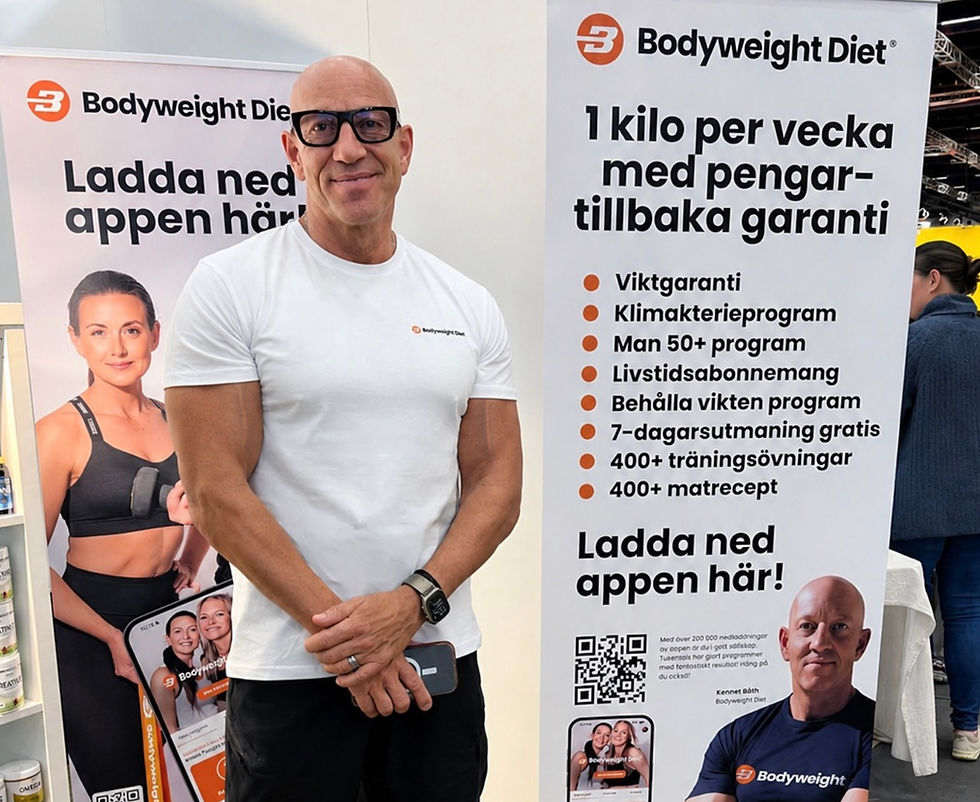
Want the food portion served? Download the Bodyweight Diet app try our free 7-day program with a simple diet plan and workout for men and women 50+ who want to keep their metabolism, energy and weight on track. No starvation diets, no fad diets. Just what works in the long run.
Kennet Bath